Let’s Talk


Oops! Something went wrong while submitting the form.

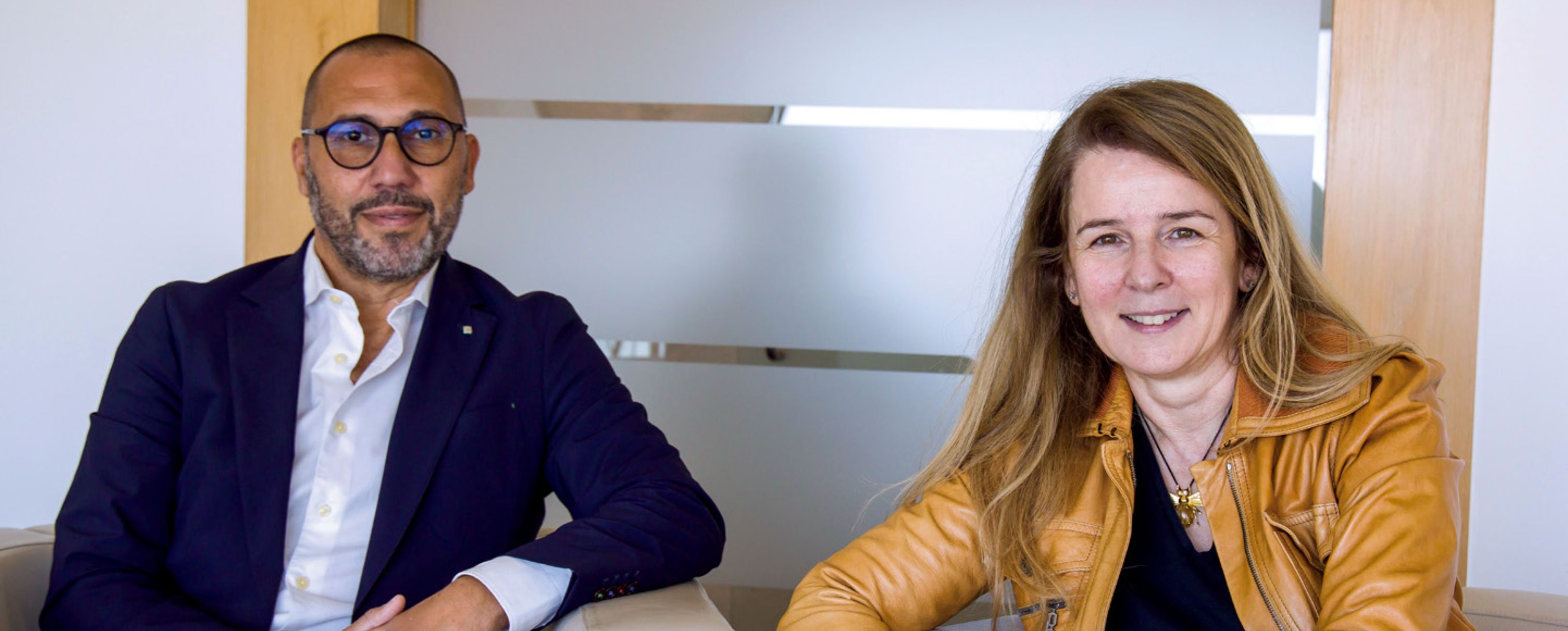
|---Module:text|Size:Small---| In an interview with Human Resources Portugal, Sónia Vasconcelos, People Executive Director at Celfocus, explains how AI, data integration and People Intelligence are reshaping talent management, employee experience and the future of work.
Here’s the full interview transcription:
Technological transformation has moved from being a behind-the-scenes topic to becoming a central priority on the Human Resources agenda. At Celfocus, this shift has a clear name and direction. In Sónia Vasconcelos’s view, the digitalisation of processes and easier access to data have already delivered clear gains in efficiency, improved decision-making in talent management, and enhanced employee experience throughout the entire professional journey. However, with the arrival of artificial intelligence (AI), “in its different forms, from generative AI to AI agents”, Sónia believes that the potential impact becomes “decisively greater, more relevant and impossible to ignore”.
This conviction is not merely theoretical. All core People Management processes at Celfocus are already supported by technology, but the gradual adoption of specialised solutions across different areas has brought with it a challenge shared by many organisations: ensuring the integration, consistency and intelligent use of information flowing across multiple platforms throughout the employee lifecycle.
Technological transformation within Celfocus HR department is therefore not simply a matter of isolated investment in tools. Rather, it represents a fundamental change in the way the organisation views its own data: from pieces of information scattered across different systems to a strategic asset that supports concrete decisions about people.
From fragmented data to a single source of truth
To address this challenge, Celfocus has been steering its evolution towards an approach described as People Intelligence, a concept that goes beyond merely making data available. In practice, the company is consolidating information from different People Management platforms, transforming fragmented sources into a view that is increasingly close to a single source of truth for the organisation.
The aim is to provide leaders with reliable and actionable insights that enable them to make better-informed decisions about talent, anticipate future needs, and monitor critical indicators consistently, “instead of relying on multiple dashboards or isolated sources of information”.
The ability to cross-reference large volumes of information almost in real time is one of the most significant changes technology has brought to the HR function. Today’s technology makes it possible to process vast amounts of data from multiple sources, whether more or less structured, detect patterns and relationships, and generate insights and even forecasts that previously required a much more time-consuming analytical effort.
AI now allows answers to be obtained from questions posed in natural language, removing the need for a specialist to translate human language into machine language through database queries. More than that, the answers consider “our culture, organisational context and talent management ecosystem”, which represents “a dramatic difference compared with what was possible until now”.
AI-first, but with people making the decisions
Over the years, task automation has made HR processes at Celfocus more efficient and scalable. With access to today’s AI tools, however, this potential for efficiency and scalability increases significantly. The real challenge is not simply identifying isolated opportunities for automation and integration but going beyond traditional process re-engineering. It is about redesigning processes with an AI-first mindset, while always keeping responsibility for outcomes with people, in a model described as human in the loop. To achieve this, it is essential to understand clearly how AI works, “what it is and what it is not”, so that organisations can decide judiciously when and how to use it.
This caution also stems from an awareness of the challenges that implementing technological solutions creates for organisations. Sónia Vasconcelos identifies resistance to change, whether driven by inertia, distrust, concerns or fear, as one of the main obstacles. Any more transformative implementation should be accompanied by change-management mechanisms specifically designed for the context in which it will occur. In the particular case of AI, the risks associated with the quality of the information used to train learning models, namely the possibility of perpetuating bias. The full adoption of this technology will depend on the collective and individual ability to change mindsets and reinvent ourselves. “It is an entirely new paradigm,” one that requires a new capacity to look at the world’s challenges, problems and needs with the aim of designing innovative solutions at a speed never before possible.
This reflection on risks also leads her to address the ethical concerns that should accompany any technological strategy in people management. Leaders must ensure that information is accessible only to those who genuinely need it, safeguarding the privacy of personal data and respecting its integrity. When selecting any technology, organisations must ensure compliance with applicable regulations, particularly security and data-protection requirements. In the specific case of AI, they must also understand and comply with the AI Act, the European regulation intended to ensure that AI is safe, ethical and respectful of fundamental rights. This is not a secondary consideration: it is an integral part of any decision about which technology to adopt and how to implement it within the organisation.
Skills, culture and the future of work
Technology also plays an important role in how organisations retain and motivate talent. Sónia Vasconcelos links this contribution to greater objectivity, clarity and transparency in processes, faster decision-making and easier access to information, but also to companies’ ability to redesign their offering and develop challenging projects, which ultimately has an impact on customer satisfaction, profitability and business sustainability. In short, technology contributes to engagement, motivation and talent retention by improving the employee experience throughout the entire employee journey.
One of the clearest examples of this improvement is personalisation. The ability to personalise the employee experience has long been recognised as a differentiating factor, but it has never been as feasible as it is today. AI strengthens the potential for People Intelligence platforms, enabling organisations to understand each individual from multiple perspectives and to know what each employee values and aspires to. This information makes it possible to tailor the employee value proposition (EVP) to each person, whether in terms of training, internal mobility plans or benefits.
This logic of anticipation also extends to the way Celfocus approaches skills development. Sónia Vasconcelos believes that companies have a responsibility to create the conditions for employees to develop the necessary skills, through training content, projects or other learning initiatives. However, employees themselves must also be aware of this need and be willing to engage in continuous learning. “Lifelong learning is essential, “describing it as one of the organisation’s core skills and a non-negotiable requirement, alongside curiosity. In a context of accelerated technological change, there’s the importance of applying the concept of adjacent skills effectively skills that are close to those employees already possess, making lateral learning easier and promoting upskilling, reskilling and internal mobility.
Asked about the relationship between technology and organisational culture, Sónia Vasconcelos argues that technology is always in the service of something: it facilitates and supports, but organisational culture comes first and shapes the way technology is used. Decisions about technological implementation therefore directly influence how teams collaborate and work. In environments seeking greater collaboration and agility, technology should encourage and facilitate teamwork and information sharing; in more competitive contexts, it tends to result in more restricted access, tighter controls and additional approval layers.
Looking to the future, truly disruptive technological advances are almost always associated with periods of profound transformation, if not outright revolutions. Organisational agility comes from simpler processes, less bureaucracy and better, faster decisions, but the expected impact of AI will depend fundamentally on people themselves and on their ability to understand and anticipate their new “self”.
For that reason, organisations must focus on people, creating the conditions needed to develop the mindset and skills that will enable them to contribute decisively to this new paradigm. “In this revolution, as far as people and the world of work are concerned, technology is both the catalyst and the lever,” Sónia Vasconcelos concludes, adding that the process “will go well, with advances and setbacks, and, above all, with a great deal of learning”.
It is this combination of technological ambition and organisational prudence that appears to summarise Celfocus’s approach: investing without hesitation in the potential of AI to transform People Management but always doing so from a prior question about what the organisation wants to be and how it wants its teams to work together. In this reading, technology does not replace that definition of direction. It simply makes it possible on a larger scale and at a pace that, until only a few years ago, would have been unthinkable.