Let’s Talk


Oops! Something went wrong while submitting the form.
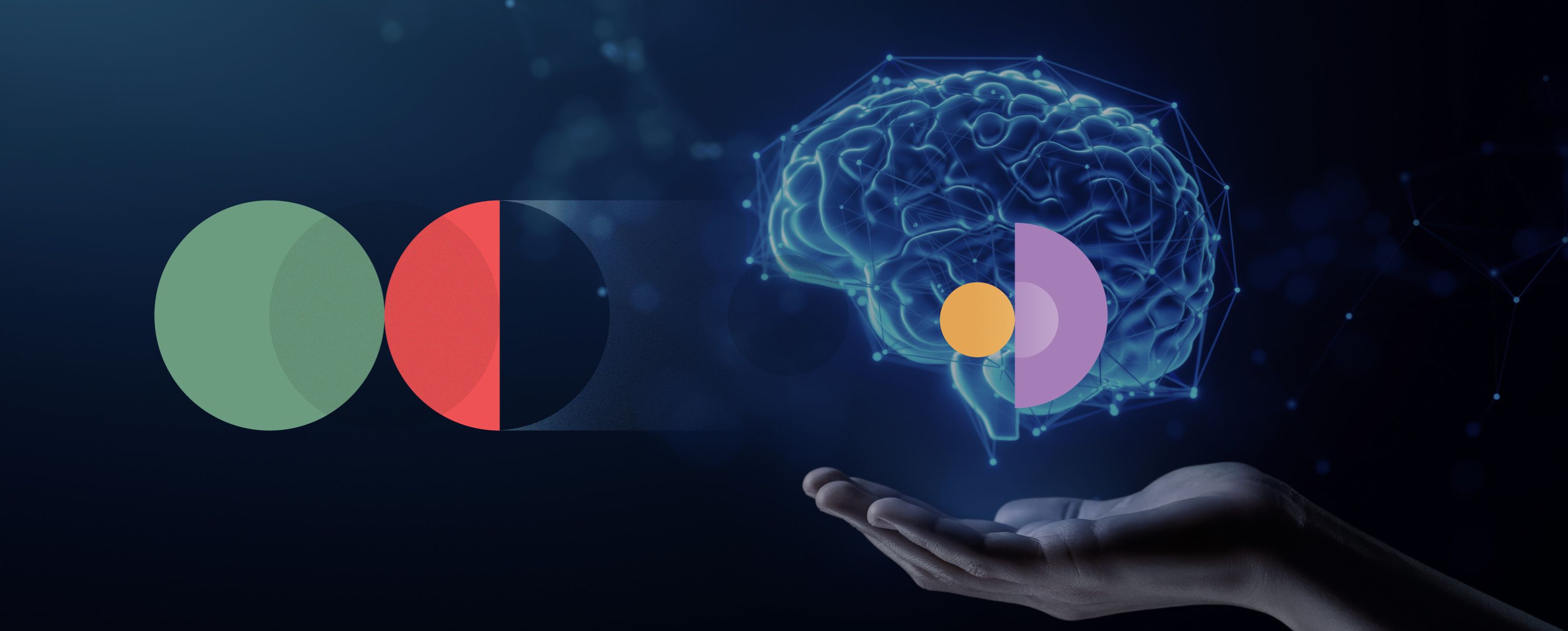
|---Module:text|Size:Small---| We are witnessing the beginning of a historic shift. After the long wave of Digital Transformation, and amid a global climate of uncertainty, a new stage is emerging – Transformation through Artificial Intelligence (AI). This is not just another technological trend. It is a profound change in how organisations think, decide, operate and innovate.
Recent advances in data and in Generative AI have opened the door to systems capable of acting autonomously – a true paradigm shift. Today, at scale, algorithms analyse information, make decisions and adjust dynamically. We begin with operational automation, and, in time, we will see entire businesses built on AI, capable of evolving continuously by learning and adapting from data. This ushers in a cycle of permanent reinvention, creating space for new opportunities and business models we cannot yet imagine.
But we need to be realistic. The technology is progressing at extraordinary speed, yet it has not reached full maturity. What we see today are the foundations of a new global infrastructure. In 2025 alone, Gartner estimates that AI spending will reach 1.5 trillion dollars (US notation) with particular focus on data centres, specialised chips, foundational models and ecosystems of autonomous agents. It is a historic effort, comparable to the creation of the Internet or the electrification of industrial economies. And breakthroughs are almost weekly: new language models, agent architectures and automation tools appear at a pace that challenges any previous precedent.
Not everyone views this revolution with optimism. Some fear mass job losses, increased inequality and even the diminishing role of humans. Others evoke the dystopias of science-fiction films. Yet history shows that every technological leap replaces certain tasks while creating others – usually more skilled and more fulfilling. The same happened with agricultural mechanisation, industrialisation and factory automation. In all cases, the gains ultimately outweighed the losses. We freed humans from repetitive physical labour; now we may be freeing them from routine mental work.
AI is neither good nor bad in itself – it is a powerful tool. What will make the difference is not the technology, but those who learn to use it best. AI is not humanity’s adversary; it is the human being who fails to take advantage of it who risks falling behind. And this brings us to the essential point: the real transformation is human. The technology already exists – the challenge will fall on people.
Early adoption cases show that using AI “on top of” existing processes delivers limited productivity gains – for example, around 20% in software development – and these are difficult to scale across teams and organisations. The best results come from redesigning processes, roles and business models based on what the technology genuinely enables. And because we are in a race, the likely winners will be those who learn faster and adapt most effectively to this new paradigm.
This is where the role of people becomes decisive. AI will replace tasks, especially the most routine, but it will also free up space for what only humans can do: think, imagine, feel and create meaning. The question is no longer “what will AI take from us?”, but “what will we choose to do with the time and potential it gives back to us?”
A recent study from MIT offers an interesting framework for this new landscape: the EPOCH Framework. It identifies the five human capabilities that best complement AI: Empathy, Presence, Ethical Judgement, Creativity and Hope (vision and purpose). These are the qualities machines cannot replicate, and the true differentiators in the future of work. Roles that cultivate these capabilities – leadership, teaching, creation, relationship-building – are also the ones growing the fastest. The message is clear: the more human our contribution is, the more relevant it will become in a more intelligent world.
Leaders and managers will also need to reinvent themselves. The leadership of the future will not be limited to motivating human teams but will involve managing hybrid ecosystems where humans and AI agents work side by side. It will require learning how to allocate tasks, define ethical boundaries, and create trust and shared purpose between those who feel and those who calculate.
What is unfolding is not the triumph of machines. It is the beginning of a new era in which human and artificial intelligence complement and even strengthen one another. More than those who master the technology, the future will belong to those who give it purpose: making the world more human, not merely more intelligent.