Let’s Talk


Oops! Something went wrong while submitting the form.
|---Module:text|Size:Small---| For decades, telecom operators have built and operated software and network systems following a consistent model: applications were designed, systems integrated, processes defined, and people responsible for execution.
This model worked. It scaled for years and enabled the digital transformation of the telecom industry. But today, it no longer scales with the growing complexity of modern networks and IT environments.
Modern telecom environments - spanning OSS, BSS, network domains, and customer platforms - have become too complex to be efficiently operated through traditional approaches. Multiple domains, fragmented data, specialised tools, and distributed teams create limited visibility and difficult coordination.
When something goes wrong, the process is familiar: multiple alarms, parallel investigations, duplicated effort, and slow root cause identification. The issue is not a lack of data. There is more data than ever. It is a lack of context. Operators are not managing networks end-to-end; they are reacting to fragmented symptoms.
This has direct implications for efficiency, cost, and service quality. As complexity increases, more effort is required to achieve the same outcomes, reducing scalability and responsiveness. The real problem: complexity has outpaced the model.
What is changing is not just technology, but the operating model. For decades, telecom systems were defined by applications. Now, they are increasingly defined by intelligence - systems capable of understanding context, making decisions, and executing actions across network and IT domains.
This is what we call Next-Gen Intelligence (NGI). It is not a product, but a shift in how telecom systems are designed and operated.
The incumbent model is based on human-driven execution: engineers navigate systems, perform tasks, and resolve issues. The emerging model is different: teams request outcomes, and intelligent systems execute across network and IT environments.
Operations move from reactive to predictive, from manual to automated, and from fragmented to contextual.
Nowhere is this shift more visible than in Autonomous Networks.
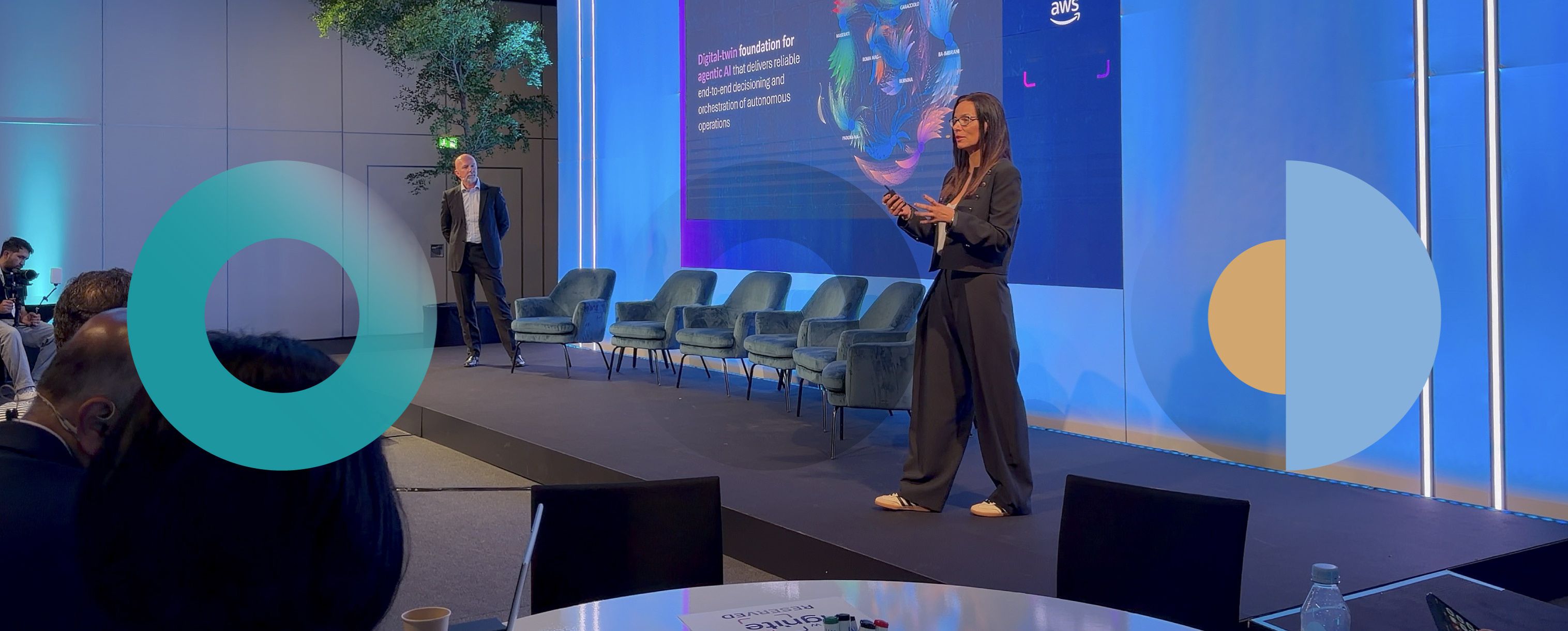
A Digital Twin provides a real-time representation of the telecom network, integrating data across domains into a unified, end-to-end view. It does not just collect data; it understands relationships between services, resources, and events.
It can correlate alarms, identify root causes, simulate the impact of changes, and provide continuous system-wide visibility. Where traditional tools see domains, the Digital Twin understands the network as a unified system.
On top of this, AI agents monitor operations, detect anomalies, recommend actions, and increasingly execute them automatically - from fault resolution to service optimisation.
Together, they form a new operational layer: the Digital Twin understands, and the agents execute. This is the foundation of autonomous, or near-autonomous, telecom networks.
This shift is already happening. Across multiple transformation programs, telecom operators are reducing resolution times, eliminating duplicated effort, and performing impact analysis in hours instead of days.
More importantly, the nature of work is changing. Troubleshooting and manual correlation are being replaced by new responsibilities: defining logic, supervising intelligent systems, and governing decisions. Less system operation and more intelligent management.
Next-Gen Intelligence can be simplified into three components:
Without data, there is no intelligence. Without context, no decision. Without execution, no value. And value now lies in how operators structure data, model networks, design intelligence, and govern automated decisions.
This shift also introduces new governance challenges. As decision-making becomes automated, organisations must ensure transparency, auditability, and alignment with strategic and regulatory requirements.
At Celfocus, our teams have been working alongside some of the early pioneers in telecom transformation, particularly in Autonomous Networks. Through this experience, we have consistently observed that, beyond establishing the right data context for real-time AI operations, there is another critical factor: human creativity and ingenuity.
These are capabilities we deliberately cultivate within our teams, combining them with deep knowledge of telecom networks and operational processes. Without this combination, it becomes extremely difficult to move from concept to production at scale.
The question for telecom leadership is no longer whether this shift will happen, but how quickly can operators adapt - and what the cost of inaction will be. The future of telecom will not be defined by the systems operators run, but by the intelligence that runs those systems - and by their ability to govern it.
And that future is already here.