Let’s Talk


Oops! Something went wrong while submitting the form.

|---Module:text|Size:Small---| Telecom operators have invested heavily in modern data platforms over the past decade. Data lakes, cloud analytics environments and real-time processing capabilities have become foundational to digital transformation strategies. Yet despite these investments, many organisations still struggle to translate data potential into consistent, enterprise-wide value.
The challenge is not a lack of data infrastructure. It is the absence of a product mindset applied to data.
Across telecom organisations, data initiatives are frequently built around specific business domains such as network optimisation, customer analytics or revenue assurance. These initiatives often deliver valuable insights locally, but they rarely scale easily across the enterprise. When new cross-domain use cases emerge – combining network, customer and operational data, for example – teams frequently encounter the same obstacles: complex integrations, manual processes and fragmented governance.
The result is slower innovation, increased operational cost and limited readiness for AI-driven use cases. To overcome these barriers, telecom operators need to rethink how data is designed, governed and consumed. Increasingly, forward-looking organisations are adopting the concept of Data as a Product.
Traditional data architecture is typically organised around technology rather than usability. Data is stored, processed and accessed through centralised platforms, but ownership and responsibility often remain unclear. Data consumers must navigate complex approval processes, inconsistent documentation and varying quality standards.
This creates several common challenges:
These challenges make it difficult for telecom organisations to fully exploit their most valuable asset: the vast amount of operational and customer data generated across their networks and services.
The concept of Data as a Product addresses these limitations by applying product management principles to data assets. In a data product model, datasets are no longer treated as raw outputs of systems. Instead, they are designed, owned and managed as reusable products that deliver measurable value to consumers across the organisation.
Each data product is associated with a specific domain – such as customer value, network performance or service quality – and is owned by the domain team responsible for maintaining its quality, documentation and lifecycle. Like any digital product, it includes clearly defined interfaces, service levels and governance policies.
This shift brings several advantages:
In practice, this approach transforms data from a technical asset into a strategic capability that can be reused across the organisation.

|---Module:text|Size:Small---|
Implementing a data product strategy requires more than simply repackaging datasets. It involves building a comprehensive framework that enables scalable delivery, governance and consumption of data products.
Four key pillars typically underpin this transformation.
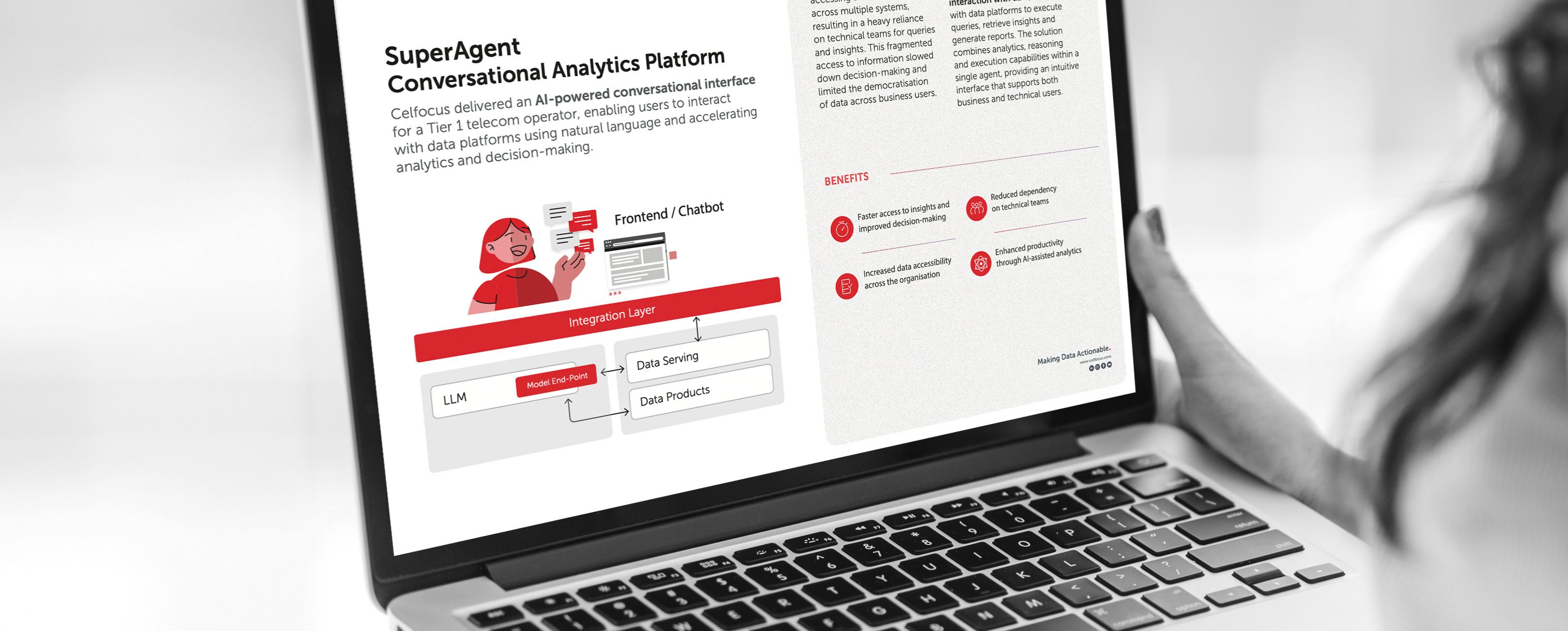
Conversational AI capabilities are also transforming how users interact with data. Instead of writing complex queries, business users can explore datasets and uncover insights simply by asking questions, significantly lowering the barrier to data-driven decision making.
|---Module:text|Size:Small---|
When successfully implemented, a data product strategy delivers measurable benefits across multiple dimensions.
Perhaps most importantly, this approach prepares organisations for the next wave of AI-driven innovation. AI models and Agents require reliable, well-structured and well-governed data. Data products provide exactly that foundation.
For telecom operators navigating intense competition, evolving customer expectations and the rapid emergence of AI technologies, data must become more than a by-product of operations. It must become a product in its own right.
By adopting a product mindset for data – supported by strong governance, domain ownership and intelligent automation – organisations can move beyond isolated analytics initiatives and create a scalable ecosystem of reusable insights. The telecom industry has already built the platforms capable of processing massive volumes of data. The next step is ensuring that data is structured, governed and delivered in a way that makes it truly usable.
Only then will operators unlock the full value of the data they already possess – and position themselves to lead in an increasingly AI-driven digital economy. Know more about Celfocus’s approach to Data Products here.