Let’s Talk


Oops! Something went wrong while submitting the form.

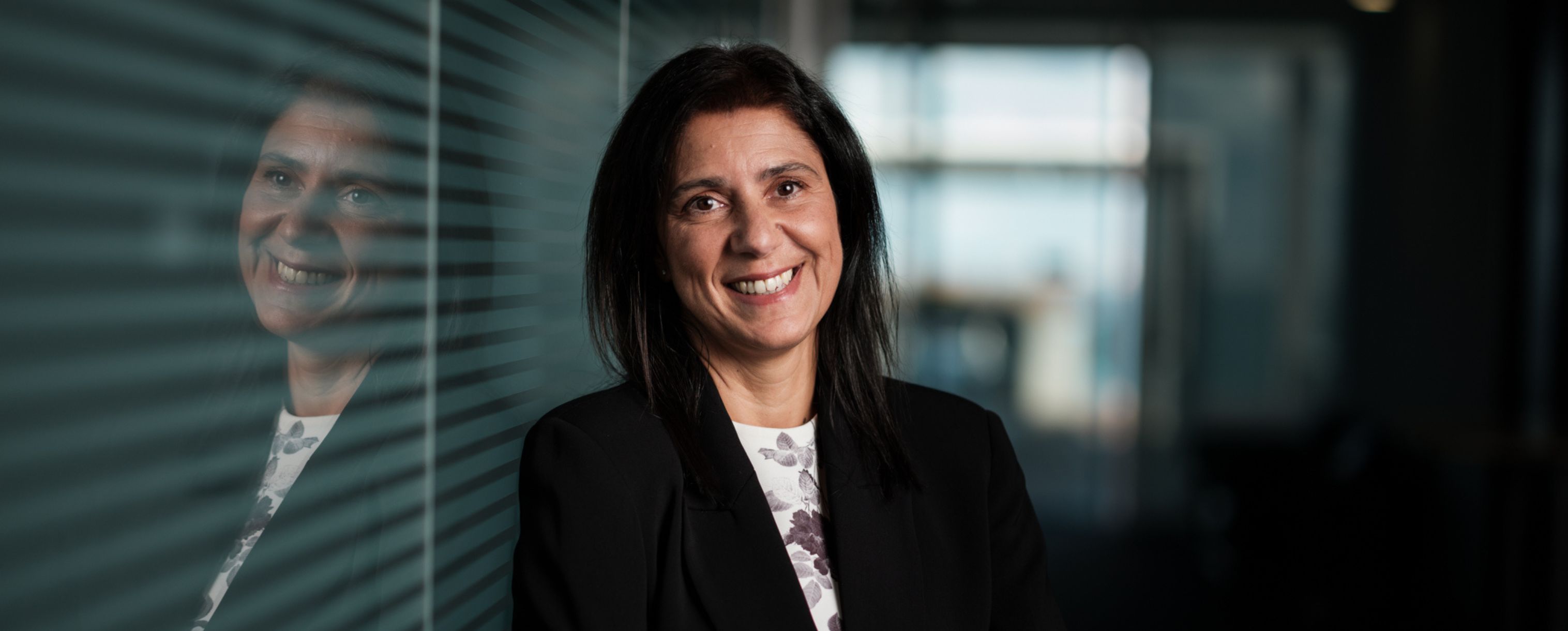
|---Module:text|Size:Small---| In an interview with Human Resources Portugal, Verónica Nabeiro, DEI Lead at Celfocus, shares how this approach takes shape in practice, from structured recruitment processes and development opportunities to partnerships, community initiatives and internal governance models that sustain progress over time.
Here’s the full interview transcription:
At Celfocus, Diversity, Equity and Inclusion are not a parallel topic. It is embedded in how we think, decide and act every day.
In a global, multicultural, and distributed context, diversity happens naturally. The real challenge, and where we focus on our intent, is ensuring that diversity translates into inclusion and equity. We know that one size doesn’t fit all. Everyone has different needs, contexts, and ambitions, and this awareness guides us.
More than processes, this is about activating a collective mindset across leadership, teams and the organisation, and creating tangible opportunities for that intent to turn into action.
This is also why we actively engage our people in initiatives with real impact, bringing them closer to different realities and reinforcing the role everyone can play in building a more inclusive society. Examples include the Solidarity Football Tournament promoted with Lisbon Project, strengthening our support for migrant communities, and Technovation Girls, which mobilizes children, young people and mentors at Celfocus to develop technological solutions addressing the UN Sustainable Development Goals.
This commitment is lived through a dedicated team, Acting with a Purpose, made up of individuals who voluntarily step forward to make a difference and bring consistency to this agenda within the organization.
Our DEI approach is built on seven key pillars:
More than a list of priorities, these pillars reflect an integrated vision. Creating real conditions for all individuals to participate, grow, and thrive.
This vision is aligned with our ESG commitments, particularly within the social dimension, where we aim to generate positive impact for people and communities. We believe organisations have an active role to play in society, and we are committed to embracing that role with responsibility and purpose.
At a national level, we align with initiatives such as the Portuguese Diversity Charter, promoted by APPDI, and the Commitment to Inclusion by the Inclusive Community Forum at Nova SBE, reinforcing our commitment to a broader transformation movement.
This alignment goes beyond formal adherence. In 2025, we were awarded the Diversity Seal, also promoted by APPDI, in the category recognising communication and promotion of the Charter’s principles. This distinction reflects our commitment to making these principles visible, understood, and lived daily.
In the technology sector, where gender imbalance remains a reality, with women representing around 20% to 25% of ICT professionals in Europe, diversity is not just a goal. It is a strategic level.
At Celfocus, this commitment is also reflected internally, with 32% of our workforce being women, a figure we are working to consistently strengthen. We believe diverse teams have a unique ability to challenge, reinvent, and innovate. Different perspectives bring new ways of addressing problems and building more complete and relevant solutions.
However, diversity alone is not enough. Inclusion is essential. It means ensuring that all voices are heard, valued, and able to actively contribute. This is where intent makes the difference.
Ultimately, a truly competitive advantage is also built through employee experience. The more we foster active participation, the more people feel they belong, the more they contribute, and the more purpose shifts from an idea to a lived reality.
When diversity is translated into active participation, inclusion becomes a competitive advantage. This is part of the DNA of the Acting with a Purpose team.
We recognise that access is the first step towards inclusion. That is why we have been intentionally working to build more inclusive recruitment processes, from how we communicate opportunities to how we assess talent.
We have reviewed job descriptions to ensure inclusive language, expanded recruitment channels to reach more diverse profiles, and implemented structured evaluation criteria to reduce bias.
At the same time, we invest in awareness among recruitment teams through training, as we believe fairer processes begin with greater individual awareness.
We believe the real challenge is not just entering the organisation but growing within it. We work to ensure all individuals have access to development, progression and recognition opportunities, regardless of their starting point.
However, equality does not mean treating everyone the same. Once again, one size doesn’t fit all. We actively identify and remove barriers that may affect different profiles, creating more equitable conditions.
Continuous learning is also a key pillar, enabling the development of both technical and human, inclusive skills.
Through transparent processes, mentoring programs, and a culture of knowledge sharing, we aim to ensure growth is accessible to all.
Promoting gender equality begins long before entry into the labour market. It starts with access, exposure, and the opportunities we create early on.
With this in mind, we invest in initiatives such as Technovation Girls, encouraging young girls to explore technology. This year, we took an additional step by integrating a team from Mundu Nôbu, reinforcing our commitment to ensuring access to these opportunities for all.
This commitment also extends to supporting social scholarships in partnership with EPIS, helping more girls pursue academic paths in areas such as engineering and data science.
More broadly, we sponsor Women Shaping Tech, promoted by APDC, an initiative that recognises and values projects across the country that foster girls’ education in STEM fields.
Throughout the professional journey, we remain engaged through programs such as PWN mentoring, supporting women’s development and progression at different career stages.
Internally, we are launching the Women in Tech Employee Resource Group, creating a space for community, sharing and visibility, where personal and professional development intersect with purpose.
At Celfocus, salary definition and progression are based on role complexity, market benchmarks, internal equity, performance, and potential. The process includes monitoring and control mechanisms to prevent bias and any form of discrimination.
At Celfocus, diversity is intentionally cultivated. It is present in strategic decisions, but also in everyday actions. This consistency is what builds a genuine sense of belonging.
When people feel they can be themselves, without the need to adapt or wear a mask, they develop a stronger connection to the organisation.
We also believe belonging goes beyond professional experience. Celebrating key dates and themes that reflect who we are as individuals creates space for sharing, recognition and connection. These moments strengthen empathy, bring different realities closer together, and make culture more vibrant and inclusive.
This is increasingly relevant for younger talents, who seek environments where purpose, inclusion, and impact are real, not just communicated.
Our community initiatives, along with employee engagement in social impact actions such as volunteering, reflect this commitment and strengthen our connection with future generations. Recent examples include donations to the Portuguese Red Cross supporting victims of Storm Kristin, and winter clothing donations to the homeless through Comunidade Vida e Paz.
The inclusion of people with disabilities requires conscious and tailored action. We continuously work to improve accessibility, ensure reasonable accommodation, and create real conditions for integration.
At the same time, we partner with specialised organisations such as Valor T and Associação Salvador, among others, to help identify suitable profiles and connect with qualified talent.
We recognise that each journey is unique. That is why we invest in adapted onboarding and ongoing personalised support, ensuring integration is not a one-off moment but a sustained process.
We are aware that this is a continuous learning journey, and we approach it with humility and intent.
We believe change starts with awareness. We promote training and awareness initiatives that bring visibility to often overlooked topics, such as unconscious bias and behaviours that may unintentionally exclude.
Our internal learning academy, LearnIn, also includes training on harassment prevention and a course dedicated to understanding disability.
We have also been running Diversity Talks, creating open dialogue spaces on relevant and current topics where different perspectives can be shared.
More than transmitting knowledge, we aim to create moments of reflection that encourage individuals to question, adapt, and evolve.
Cultural transformation is only possible with committed leadership.
At Celfocus, we engage leaders not only as sponsors of DEI, but as active agents of change. Inclusion becomes real and consistent through everyday decisions.
This commitment is also reflected in governance. We have a Gender Equality, Diversity and Inclusion Committee that meets quarterly, ensuring continuous alignment, defining concrete actions, and monitoring progress.
This high-level engagement was recognised in 2025 with the Diversity Seal awarded by APPDI, reinforcing the path we are building.
At the same time, we monitor progress in a structured way, with defined objectives and regular tracking.
We also recognise that not everything that matters can be measured. That is why we complement data with active listening, ensuring that we remain connected to the real experience of our people.
Measuring is essential, but understanding is critical. At Celfocus, we use a combination of quantitative indicators, such as representation, progression, retention, and engagement, to track our evolution.
Data also shows that this journey is being recognised internally. Employees rate Celfocus’ commitment to diversity, equity and inclusion at 4.09 out of 5, and feel comfortable expressing opinions and concerns without fear of negative consequences, with a score of 4.08 out of 5. These indicators reflect not only perception, but also the development of a culture of trust and psychological safety.
However, we know numbers alone do not tell the full story.
We therefore value qualitative feedback, which allows us to capture deeper nuances, experiences, and perceptions that are not always visible in metrics.
It is through the combination of what we measure and what we listen to that we can evolve more consciously and in alignment with the real experience of our people.
We see DEI as a journey. There are still challenges to address, particularly in terms of representation in technical areas and the inclusion of people with disabilities.
Our priorities are to continue evolving with intent. Strengthening impact measurement, scaling what works, and maintaining the ability to question and improve.
Because, ultimately, DEI is about ongoing commitment. And it is this intentionality that we want to define us.